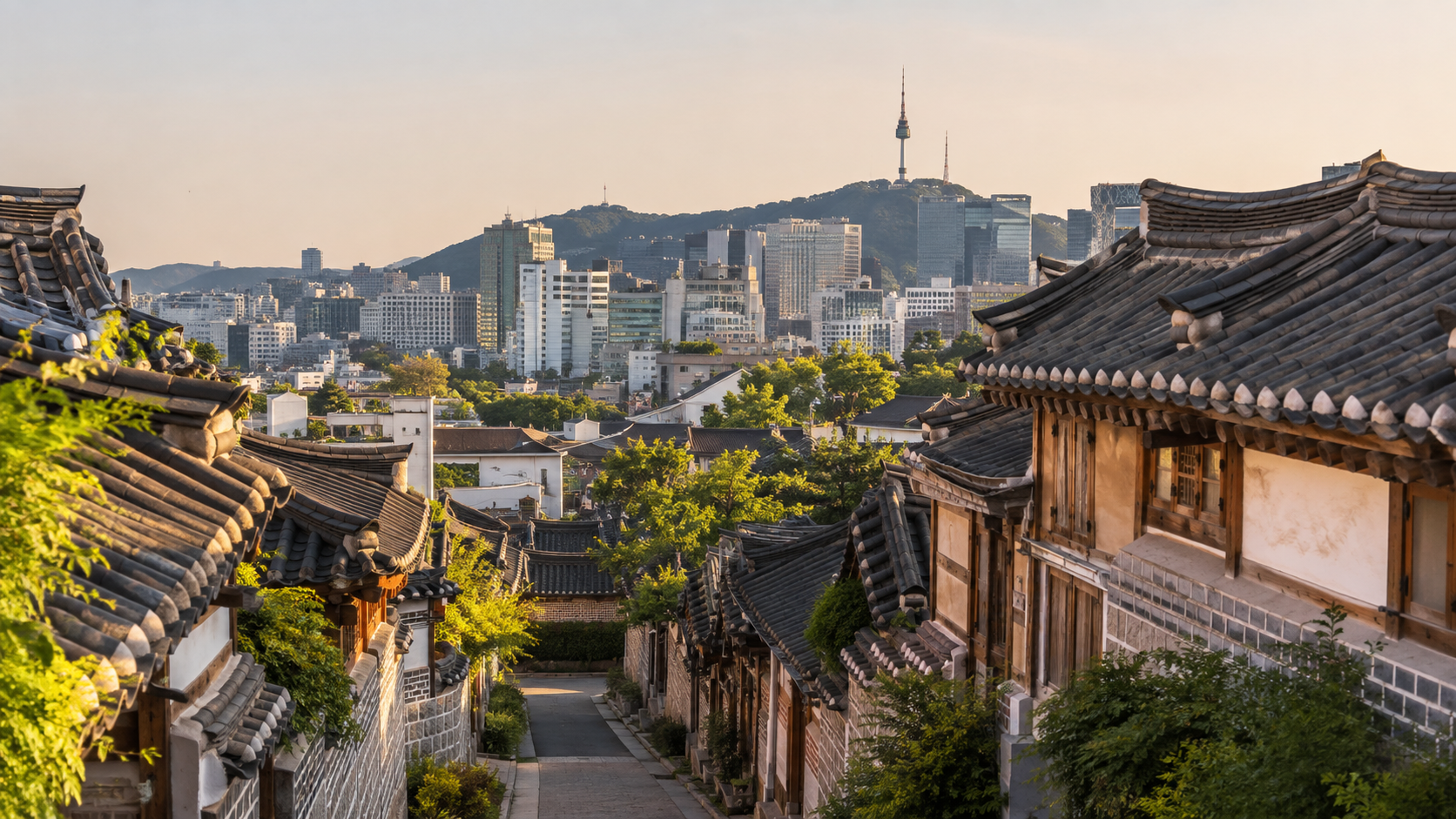
Planning your first trip to Seoul? South Korea’s capital combines centuries-old palaces, energetic shopping streets, peaceful temples, trendy neighborhoods, and unforgettable city views.
With so many options, deciding where to begin can feel overwhelming. This guide introduces 15 of the best places to visit in Seoul, along with practical tips to help you organize your itinerary.
Whether you are interested in history, food, architecture, or everyday Korean culture, these attractions offer an excellent introduction to the city.
1. Gyeongbokgung Palace
Gyeongbokgung Palace is one of Seoul’s most recognizable historical landmarks and an essential stop for first-time visitors.
Once the main royal palace of the Joseon dynasty, its spacious courtyards, traditional buildings, and mountain backdrop offer a memorable introduction to Korean history.
Highlights include Gwanghwamun Gate, the main throne hall, and the attractive pavilion overlooking the palace pond.
Many visitors rent a hanbok nearby and explore the grounds in traditional Korean clothing. According to official admission guidelines, visitors wearing qualifying traditional or modernized hanbok may receive free entry. Official hanbok admission guidelines.
Travel tip: Gyeongbokgung generally closes on Tuesdays, although holiday exceptions can apply. Confirm the current schedule before visiting. Official Seoul tourism information.
Best for: Korean history, traditional architecture, and photography.
2. Bukchon Hanok Village
Located between Gyeongbokgung Palace and Changdeokgung Palace, Bukchon Hanok Village is known for its traditional Korean houses and narrow hillside streets.
Walking through the neighborhood offers a different perspective on Seoul, with historic rooftops set against the modern city skyline.
Bukchon is not an open-air museum. It is an active residential neighborhood, so visitors should remain quiet, avoid blocking entrances, and respect residents’ privacy.
Important restrictions apply: the designated red zone does not allow tourist visits between 5 p.m. and 10 a.m., and violations can result in fines. Seoul’s official guidance recommends visiting between 10 a.m. and 5 p.m., Monday through Saturday. Bukchon visitor restrictions.
Best for: Hanok architecture, quiet walks, and traditional scenery.
3. Changdeokgung Palace
Changdeokgung Palace is an excellent choice if you prefer a historical attraction that feels closely connected to nature.
The palace complex is particularly famous for its Secret Garden, where landscaped paths, pavilions, and wooded areas create a peaceful atmosphere.
Unlike the more formal layout of some other royal palaces, Changdeokgung was designed to work with the surrounding landscape.
The Korea Heritage Service identifies the palace and its garden as important parts of Korea’s royal heritage. Official Changdeokgung Palace information.
Travel tip: Check current admission arrangements and garden availability in advance, especially during popular travel seasons.
Best for: Royal history, gardens, and quieter sightseeing.
4. Insadong
Insadong is one of the best places in Seoul to explore traditional crafts, tea houses, art galleries, and Korean souvenirs.
The main street and surrounding alleys feature shops selling ceramics, handmade accessories, stationery, and traditional snacks.
It is particularly appealing if you want souvenirs beyond typical convenience-store gifts or major shopping brands.
Stop at a traditional tea house, browse local craft shops, or simply take your time exploring the side streets.
Insadong also fits naturally into a walking route that includes Gyeongbokgung Palace, Bukchon, and nearby historical neighborhoods.
Best for: Souvenirs, traditional tea, and Korean crafts.
5. N Seoul Tower
N Seoul Tower, located on Namsan Mountain, is one of the city’s best-known skyline landmarks.
Visitors come for elevated views of Seoul, particularly around sunset and after dark when the city lights become more dramatic.
You can explore the surrounding mountain area, enjoy the outdoor viewpoints, or visit the tower’s observation facilities.
Depending on your preferred route, reaching the area can involve walking, public transportation, or the Namsan cable car.
Travel tip: Check visibility and weather conditions before paying for an observation experience, especially during hazy or rainy weather.
Best for: Skyline views, sunset, and evening sightseeing.
6. Myeongdong
Myeongdong is one of Seoul’s most famous shopping districts, especially for Korean beauty products, fashion, and convenient access to restaurants.
The neighborhood becomes particularly lively later in the day, when food stalls and busy shopping streets create an energetic atmosphere.
Popular activities include browsing cosmetics stores, trying street snacks, and exploring the nearby underground shopping areas.
Myeongdong also works well as a central base for visitors who want easy access to other major attractions.
Travel tip: Compare prices before buying snacks or souvenirs, especially in heavily visited areas.
Best for: Shopping, Korean beauty products, and evening street life.
7. Gwangjang Market
Gwangjang Market is an excellent stop if you want to experience a traditional Seoul market and try a variety of Korean foods.
The market’s food stalls offer recognizable dishes such as bindaetteok, which are mung bean pancakes, along with noodles, rice rolls, and other local favorites.
Its lively setting makes it a good place to observe everyday food culture and sample several dishes in one visit.
Consider walking through different sections before choosing where to eat, especially if you want to compare menus and prices.
Travel tip: Some stalls may have limited seating or payment options, so carrying a small amount of cash can be useful.
Best for: Korean food, market culture, and casual dining.
8. Cheonggyecheon Stream
Cheonggyecheon is a restored urban stream running through central Seoul.
Its walking paths provide a calmer contrast to the surrounding office buildings, shopping districts, and busy roads.
The stream is especially enjoyable in the evening, when the lighting creates a relaxed atmosphere.
Because it connects several central areas, Cheonggyecheon can also serve as a pleasant walking route between other attractions.
Seasonal events or installations may occasionally take place nearby, but schedules can change.
Best for: Relaxed walks, evening scenery, and central Seoul exploration.
9. Dongdaemun Design Plaza
Dongdaemun Design Plaza, commonly called DDP, is one of Seoul’s most distinctive modern architectural landmarks.
Its curved exterior and futuristic appearance make it especially popular with visitors interested in design, photography, and contemporary culture.
The complex hosts exhibitions, events, shops, and public spaces, although specific programming varies throughout the year.
Even without attending an exhibition, the exterior is worth seeing, particularly after dark.
Combine a visit with nearby Dongdaemun shopping areas or a walk along Cheonggyecheon.
Best for: Architecture, design, exhibitions, and nighttime photography.
10. Hongdae
Hongdae is known for its youthful atmosphere, independent shops, cafés, music, and entertainment.
The neighborhood around Hongik University attracts visitors interested in contemporary Korean culture and lively evening streets.
Depending on the day and location, you may encounter street performances, creative shops, photo booths, and busy restaurant areas.
Hongdae is also a good neighborhood for casual meals, café visits, and exploring without a strict itinerary.
Travel tip: Weekends can be crowded. Visit earlier in the day for a more relaxed atmosphere or in the evening for a livelier experience.
Best for: Cafés, nightlife, shopping, and contemporary youth culture.
11. Seongsu-dong and Seoul Forest
Seongsu-dong is a popular area for stylish cafés, independent brands, creative spaces, and converted industrial buildings.
Unlike some traditional sightseeing districts, Seongsu is more about exploring the neighborhood itself than checking off a single landmark.
Nearby Seoul Forest provides a welcome change of pace, with walking paths and green spaces that make the area especially pleasant during spring and autumn.
Combining both locations creates a balanced afternoon: enjoy a café, browse local shops, and finish with a walk through the park.
Best for: Trendy cafés, local fashion, design, and green spaces.
12. Hangang Parks
The Han River, known locally as the Hangang, runs through Seoul and offers several riverside parks where residents gather to walk, cycle, relax, and enjoy the skyline.
Popular choices include Yeouido Hangang Park and Banpo Hangang Park.
A riverside picnic is one of the easiest ways to experience a more relaxed side of Seoul.
Some visitors bring convenience-store snacks, while others rent bicycles or simply enjoy the view.
At Banpo, certain seasonal fountain or event schedules may be available, but they should always be checked in advance rather than assumed.
Best for: Picnics, river views, cycling, and relaxed evenings.
13. Starfield Library and COEX Mall
Starfield Library, located inside the COEX Mall complex, is known for its tall bookshelves and dramatic interior design.
The open library area has become a popular photo stop, while the surrounding mall offers restaurants, shops, and indoor activities.
This is a practical destination during rainy weather, very hot days, or winter cold because much of the experience takes place indoors.
After visiting the library, explore the wider COEX area or combine the stop with nearby Bongeunsa Temple.
Best for: Architecture, indoor activities, shopping, and photography.
14. Bongeunsa Temple
Bongeunsa Temple offers a peaceful contrast to the modern buildings and shopping complexes of Gangnam.
Located near COEX, the temple allows visitors to experience a quieter spiritual setting without traveling far from central urban areas.
Its traditional halls, statues, and temple grounds create an interesting visual contrast with the surrounding skyline.
When visiting, keep your voice low, dress respectfully, and remember that the temple is an active religious space.
Travel tip: Check whether any special programs or ceremonies are taking place before your visit.
Best for: Temple architecture, quieter sightseeing, and cultural contrast.
15. Lotte World Tower and Seoul Sky
Lotte World Tower is one of Seoul’s most recognizable modern landmarks.
Located in the Jamsil area, the tower includes Seoul Sky, an observation experience with wide views across the capital.
The surrounding area also offers shopping, restaurants, and access to nearby Seokchon Lake.
For a more memorable experience, consider arriving before sunset so you can see the city during daylight and after dark.
According to Seoul’s official tourism guide, Lotte World Tower reaches 555 meters and contains 123 stories. Official Lotte World Tower information.
Best for: Observation decks, modern landmarks, and panoramic city views.
How to Organize Your Seoul Sightseeing
Seoul is a large city, so grouping nearby attractions can save considerable time.
A practical approach is to organize your sightseeing by neighborhood:
Historic Seoul: Gyeongbokgung Palace, Bukchon Hanok Village, Changdeokgung Palace, and Insadong.
Central Seoul: Myeongdong, N Seoul Tower, Cheonggyecheon, and Gwangjang Market.
Eastern Seoul: Seongsu-dong, Seoul Forest, Lotte World Tower, and the Jamsil area.
Gangnam: COEX Mall, Starfield Library, and Bongeunsa Temple.
Western Seoul: Hongdae and nearby café neighborhoods.
Riverside Seoul: Yeouido Hangang Park or Banpo Hangang Park.
Rather than trying to visit every attraction in one trip, choose the neighborhoods that best match your interests.
How Many Days Do You Need in Seoul?
Three days can cover several major highlights, especially if you focus on historical Seoul and one or two additional neighborhoods.
Five days allows a more comfortable pace, with time for cafés, shopping, markets, and different districts.
If you have a week, you can explore beyond the main attractions and add experiences such as museums, hiking, or day trips.
Your ideal schedule depends on whether you prefer history, food, shopping, nightlife, or slower neighborhood exploration.
Practical Tips for Visiting Seoul
Before exploring the city, keep these simple tips in mind:
- Use Naver Map or KakaoMap when checking walking routes and public transportation.
- Group nearby attractions together to reduce unnecessary travel time.
- Check opening days, admission rules, and seasonal schedules before visiting.
- Wear comfortable shoes, especially when exploring palace districts or hillside neighborhoods.
- Respect local residents when visiting traditional residential areas.
- Avoid planning too many attractions on the same day.
- Leave room in your schedule for cafés, markets, and unexpected discoveries.
If this is your first visit, you may also find our guide to Korea travel tips for first-time visitors helpful.
Final Thoughts
The best places to visit in Seoul are not limited to famous landmarks.
Some of the most memorable moments come from walking through traditional neighborhoods, trying unfamiliar dishes, enjoying a riverside sunset, or discovering a quiet café between sightseeing stops.
Start with a few essential attractions, organize your itinerary by area, and give yourself time to experience the city beyond the checklist.
Seoul is a place where history, creativity, food, and everyday local life come together—and that variety is exactly what makes it such a rewarding destination.